Karwa Chauth - Detailed steps for a blissful celebration of matrimony
Karwa Chauth is a traditional Hindu vrat observed by married women for the well-being, long life, and prosperity of their husbands. Many women also observe it as an expression of love, devotion, and commitment within marriage.

Karwa Chauth is traditionally kept on Krishna Paksha Chaturthi of the Kartik month in the Hindu lunar calendar, although the month and some customs can vary by regional tradition. The day includes the early-morning Sargi, the fast during the day, worship of Goddess Gauri and Lord Ganesha, listening to the vrat katha, and offering prayers to the Moon before breaking the fast.
Below is a complete, practical guide—from waking up in the morning to completing the evening puja.
1) Things to arrange before Karwa Chauth Day
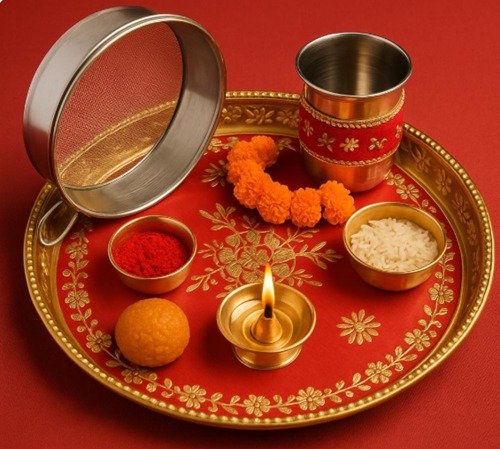
Prepare these items in advance so that the day's worship can be performed peacefully.
Karwa: A small earthen or copper pot, traditionally filled with water and unboiled milk.
Puja thali: A plate for the diya, roli or kumkum, akshat (unbroken rice), and sweets.
Diya: Preferably made from wheat dough (atta), ghee or oil and a cotton wick.
Gauri–Ganesh: Images or idols of Goddess Gauri/Parvati and Lord Ganesha.
Channi: A sieve used in the customary moon-viewing ritual.
Prasad: Fruits, sweets, and other offerings. Since this is puja of moon, white barfi or any white sweet is mandatory.
Katha arrangement: On mobile or hard copy
Clothing and Shringar: Traditional attire and personal customary adornments, if desired.
Mata ka Shringar: Red ribbon, Sindoor, Kajal, Bindi, Lipstick, Comb, etc.
Baya or gifts: If your family follows the custom of sending offerings to the mother-in-law or another elder.
Henna: Mehendi is a popular traditional adornment associated with Solah Shringar and women apply mehendi about 1 to 2 days before actual Karwa Chauth day for the colour to be completely flowered on hand. You can also write your husband's name or his initials in your mehendi design for a personalised experience.
These details differ by region and household; there is no need to acquire every possible item.
2) Morning of Karwa Chauth
Step 1: Wake up before sunrise
Wake up early, and brush teeth. Traditionally, teeth are cleaned with Musaag (bark from walnut tree easily available at local ayurvedic store). However, if not available, then daily toothpaste can be used.
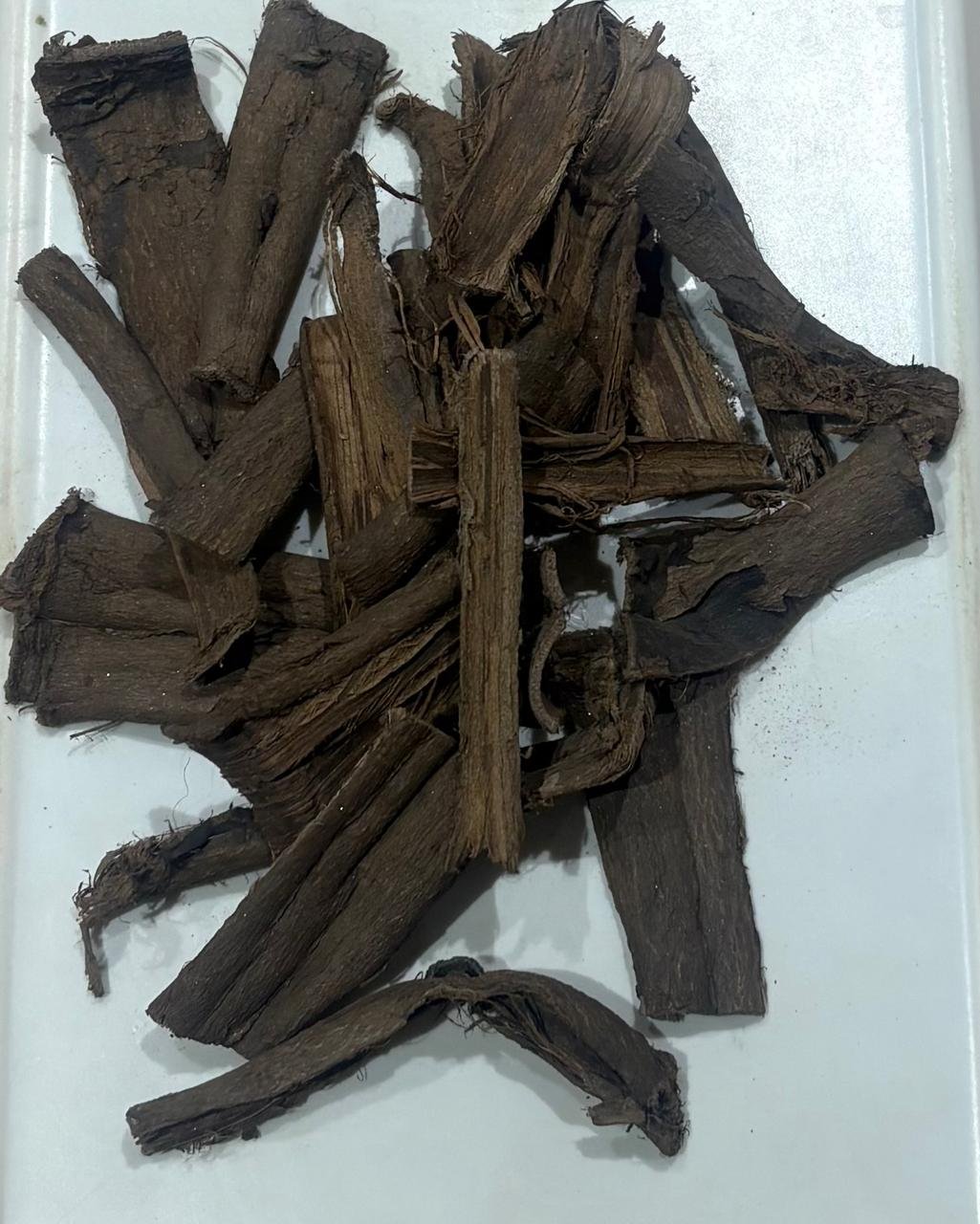
Musaag
Have a bath and get ready. Many women choose red, maroon, pink or other festive colours, wear bangles, apply sindoor and complete your shringar. These are customary expressions of saubhagya—marital auspiciousness—not compulsory requirements for every woman.
Step 2: Prepare puja thali for morning rituals (Mansne ki thali)
Puja thali should have the following
Red ribbon
Sindoor
Kajal
Bindi
Lipstick
Comb
Feni
Phiki matthi
Coconut pieces
Diya (Preferably from wheat dough (atta))
Light the diya, pray to Karwa Mata for your husband's well-being, happiness and prosperity. All the above items, which are symbols of a married woman, have to be offered to Her first. Ask for Her permission so that you can now eat Sargi.
The Diya has to be retained and kept for evening prayers. However, all other items can be given in the local temple or to a kanjak i.e. a young girl.
Please note traditions and offering differ from region to region.
Step 3: Eat Sargi
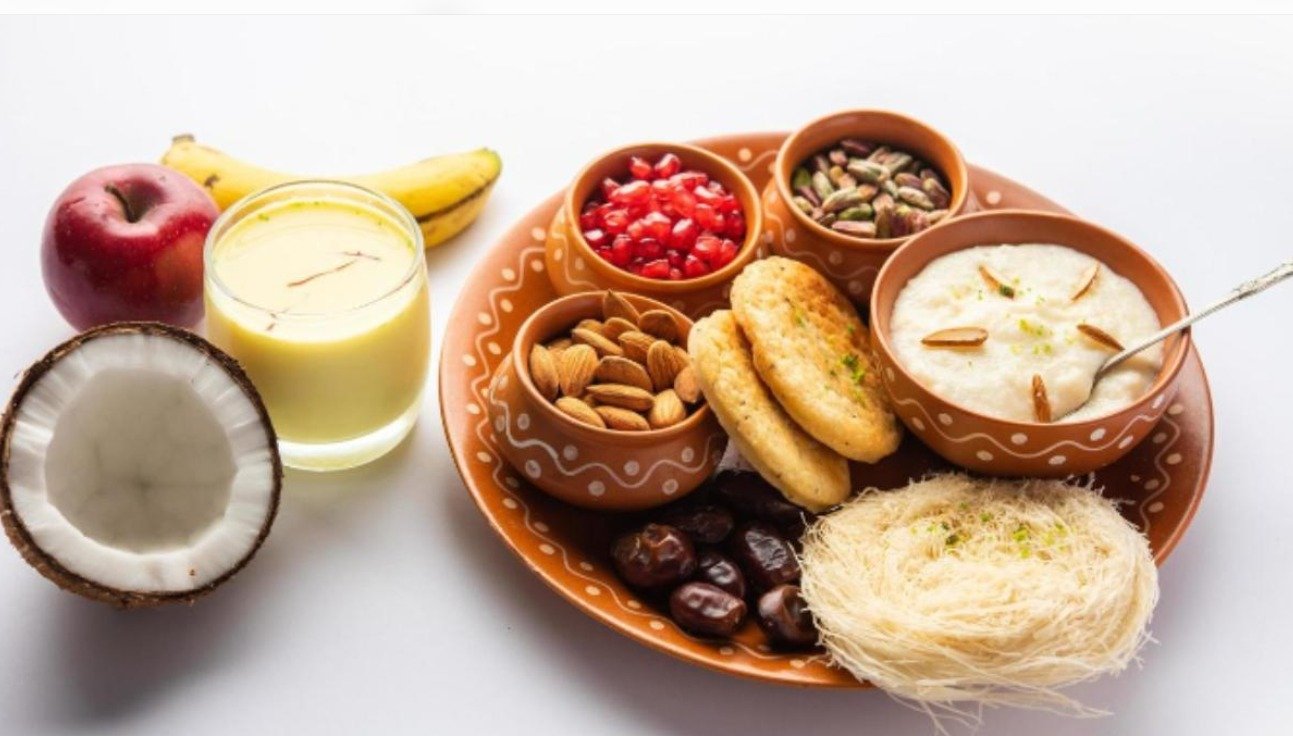
Sargi is the pre-dawn meal that sustains the woman during the day's fast. Eat Sargi before sunrise i.e. around 3:30–4:30 AM, depending on local sunrise and family practice.
Sargi commonly includes:
Fruits such as bananas, apples or pomegranates.
Dry fruits and nuts.
Roti, paratha or other filling foods.
Sweets, such as kheer or fenia.
Coconut pieces, Coconut water, milk or ordinary water.
Traditionally, your mother-in-law prepares or gives you the Sargi thali. If this tradition does not apply to your circumstances, you can prepare the meal yourself.
Eat a balanced meal and drink enough water before the fast begins. Avoid relying entirely on sweets or very salty foods, which may leave you feeling thirstier.
3) During the day
Strictly avoid the below activities during the day. These are part of the Katha that you shall hear and recite in the evening:
Do not spin / use/ rotate any spinning wheel to make yarn. (Aye katti naa Ateri naa, Kumbh charkhra feri naa).
Avoid going to neighbours house. (Gwaand pair payeen naa).
Needle should not be used during the day. No stitching work. (Suich dhaaga paayi naa).
If someone is offended or upset with you, today is not the day that you make peace with that person. (Ruthda manaiyen naa).
If someone is sleeping, dont wake that person up. Even in the morning get up by yourself. (Suthra jagayeen naa).
The traditional form is a nirjala vrat, meaning no food and no water from sunrise until moonrise.
Tips for Housewives:
Avoid hard work so that you don't feel thirsty.
Prepare the evening puja materials in advance.
Tips for Working Women:
Spend most of your time within office in AC cabins / rooms so that you are hydrated.
Leave office well before sunset so that puja timings can be adhered to.
Important: A waterless fast is not medically suitable for everyone. If you are pregnant, have diabetes, kidney or other health conditions, take medication that requires food or water, or feel faint or unwell, consult your clinician and modify or stop the fast as needed. Devotion does not require risking your health.
4) Preparations for evening puja
1) Arrange the puja thali with:
Fruits.
White Barfi
Diya - The same one used in the morning
Phiki Mathi
Dakshina
A small amount of rice (akshat) if customary in your family.
2) The karwa filled with water and unboiled milk
3) Channi (Sieve).
If your tradition includes a baya for your mother-in-law, prepare that too. It may contain sweets, fruits, clothes or other gifts according to family custom.
5) Evening puja: Step-by-step Vidhi
Wear a traditional dress, apply your shringar and now you are ready for the evening puja.
The evening puja is generally performed before sunset, during the locally prescribed puja period.
If you are performing the puja in a community with other women, then sit together, pass your thalis around the circle, and listen to the Karwa Chauth Katha. If you are alone at home, you can simply offer your prayers and listen to the katha.
Step 1: Women to sit in a circle
1) All women to sit in a circle with idols of Lord Ganesha and Goddess Parvati established in the centre.
2) Offer fruit to both the deities.
3) Keep your Karwa beside you and your puja thali in your hands.
Step 2: Listen to or read the Karwa Chauth vrat katha
This is an important part of the customary evening observance.
The story of Queen Veeravati is the central legend narrated during the Karwa Chauth fast, highlighting the power of devotion, love, and strict adherence to ritual laws.
Queen Veeravati breaks her fast after being deceived by her brothers into believing that the Moon has risen. According to the traditional story, her husband's death follows, and her subsequent devotion and observance lead to his restoration to life.
(Read here: https://www.vasturitam.com/vastu-gyan-kosh/prakaran/queen-veeravati-katha-the-traditional-story-of-karwa-chauth)
Step 3: Perform the customary thali exchange or feri
Pass your puja thali to the next woman beside you and let your thali circulate across everyone and come back to you. Touch the thali to your forehead, then to your Karwa and then keep it down. Start listening to the katha again and give your thali to the next woman. Repeat the process total 7 times.
Song sung during the feris:
Lai Veera kudiye Karwara, Lai Sarv suhagan Karwara,
Aye katti naa Ateri naa, Kumbh charkhra feri naa,
Gwaand pair payeen naa, Suich dhaaga paayi naa,
Ruthda manaiyen naa, Suthra jagayeen naa,
Behan pyari veera, Chand chadhe te pani pina,
Ve veera kudiyo Karwara, Ve sarv suhagan Karwara.
This step is not followed everywhere. If you are performing the puja alone at home, you can simply offer your prayers and listen to the katha.
Step 4: After completion of Katha and 7 times circulation
Take some water in your hand from your Karwa, circle your hand around your Thali 7 times, and offer the water to Mother Earth.
If your custom includes giving the baya to your mother-in-law, do so at the customary time and seek her blessings.
Once the puja is complete, wait for the actual moonrise. Do not mistake the evening glow, a lamp or a reflection for the Moon—the central lesson of Veeravati's story is to complete the moon-related ritual only when the real Moon is visible.
6) Moonrise ritual: How to complete the vrat
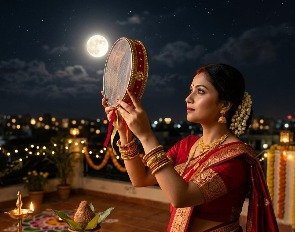
This is the final and most recognizable part of Karwa Chauth.
Step 1: Wait for the actual Moon
When the Moon rises in your city and is visible, take your puja thali, karwa, channi and diya to a suitable place, such as a balcony, terrace or open area.
Step 2: Offer arghya to the Moon
Take water in the karwa or lota. Face the visible Moon through Channi and offer the water as arghya, allowing it to flow gently into a suitable vessel or onto clean ground where appropriate. Also offer Phiki Mathi and White Barfi as prasad to the moon.
Rotate clockwise around yourself, which is symbolically a parikrama of the entire moon.
Again offer water, Phiki Mathi and White Barfi as prasad to the moon and rotate.
Do this total 7 times.
While giving arghya each time, say the below:
Sar dhadi, Pair kadi, arghya dendi sarv suhagan, chaubaare khadi
Step 3: View the Moon through the channi
Look at the Moon through the channi. Then turn and look at your husband through the same channi.
Some families repeat this sequence or have the husband look at his wife through the channi as well. Follow your family tradition if it differs.
Step 4: Your husband offers water and food
The husband gives his wife the first sip of water and a small morsel of food, often a sweet. This marks the breaking of the fast.
This is a loving customary gesture, not a universal requirement. If you are observing the vrat independently or your family follows another custom, you can break the fast yourself after completing the moon ritual.
Step 6: Take blessings and eat a proper meal
After breaking the fast, seek the blessings of elders if that is customary. You may then share the meal with your family.
Start with water and a light snack or meal rather than immediately eating a very large or heavy meal after a day without food.
7) What to do after the puja
Give the baya or customary gifts to your mother-in-law, if applicable.
Touch the feet of elders and seek their blessings, if this is part of your family's practice.
Enjoy dinner with your family.
The difficult part is over. May your resilience and devotion be heard and may you be blessed with health, wealth and prosperity.
One final point: The traditions surrounding Sargi, the number of thali exchanges, the order of prayers and the exact wording of the katha vary between families and regions. The guide above follows a commonly observed North Indian tradition; where your family has an established custom, you may follow it.
The precise puja muhurat, sunrise and moonrise times depend on your city. Use a local Panchang for the timings applicable to your location.