Kitchen in North-West (Vayavya Kon): Vastu Effects and Remedies Without Demolition
A kitchen in the North-West (Vayavya Kon) is commonly considered an alternative to the preferred South-East location in contemporary Vastu practice. Understand the traditional significance of Vayu, the distinction between classical prescriptions and modern interpretations, and practical ways to organise the cooking hob, sink, storage and ventilation without demolition.
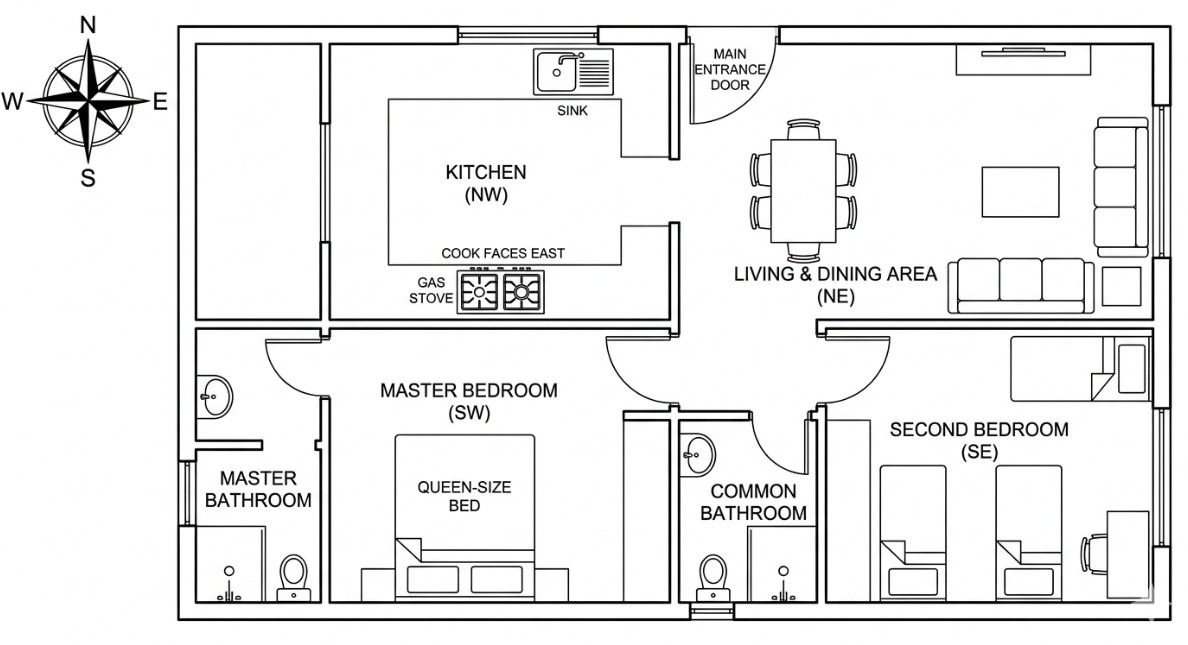
The North-West direction (Vayavya Kon) is traditionally associated with Vayu, the element of Air. It represents movement, circulation, change and activity. In Vastu Shastra, this zone is generally understood as one associated with movement rather than permanence.
South-East (Agneya Kon) is commonly recommended for the kitchen because of its association with Agni Devta. The North-West, however, is widely considered a workable alternative, particularly when the South-East is unavailable.
The association of Vayavya with Air and movement makes this placement interesting. A kitchen is a space of regular activity, cooking, heat and the movement of people and provisions. However, the exact pada occupied by the kitchen, its internal arrangement and the overall floor plan are important considerations.
But what happens when the kitchen is located in the North-West?
This is a fairly common situation in modern apartments, where room placement is often determined by the building's structural design, plumbing arrangements and available space. Relocating an existing kitchen may not be practical or economical.
Is a North-West kitchen considered acceptable in Vastu?
Why is it often regarded as an alternative to the South-East?
What are its possible implications?
Is relocation required?
What can be done without demolishing walls or relocating the kitchen?
Let us understand this placement from both traditional and practical perspectives.
1) Understanding the North-West Direction (Vayavya Kon)
North West features:
The presiding directional deity is Vayu, the God of Wind while Vayu Tattva i.e. Air element is associated with movement, circulation and change.
This zone is traditionally connected with things that move, circulate or do not remain stationary for long.
The North-West combines the directional characteristics of the North and West.
The North-West is generally associated with movement and circulation. Therefore, it is often considered suitable for activities that involve regular movement and use.
A kitchen is also an active space, involving cooking, heat, ventilation and the movement of people. This provides the basis for the contemporary view that a North-West kitchen can be workable.
2) What Do the Scriptures Say?
An important observation here is that the North-West is associated with the storage of wealth and food grains, not with the kitchen. Therefore, the common recommendation of the North-West as the second-best kitchen location is more a contemporary Vastu practice rather than attributed directly to any particular classical references. This mainly has come about due to lack of space as well as choice in apartments and an inhabitants necessity to place the kitchen in any other zone if South East is not available.
The South-East has a clear textual basis in the references above, whereas the North-West alternative is largely based on contemporary interpretations of directional characteristics and practical planning.
3) Disadvantages of a North-West Kitchen According to Vastu
The North-West kitchen is not necessarily considered a major Vastu defect. However, certain concerns are discussed in contemporary Vastu practice.
Movement and instability: The North-West is associated with Vayu and movement. Excessive activity or imbalance in this zone would be undesirable for activities requiring consistency and stability.
Fire and Air association: The kitchen represents the activity of cooking and is associated with Agni, whereas the North-West is associated with Vayu. If not planned properly, their combination may result in frequent arguments, unnecessary expenditure, instability in business or delayed marriage
Deviation from the preferred zone: North-West kitchen is therefore generally treated as an alternative rather than the first preference i.e. South East.
Excessive storage: Bulky cabinets and unnecessary accumulation can make the kitchen congested and interfere with movement and ventilation.
Poor internal arrangement: An inefficient arrangement of the cooking hob, sink, refrigerator and storage can make the kitchen uncomfortable and difficult to use. Improperly aligned stove or anti-element colour scheme in the North-West can undermine the household's backing or help from well-wishers in times of need
These concerns should be assessed in the context of the actual floor plan.
4) Practical Vastu Remedies for a North-West Kitchen (Without Demolition)
If the kitchen is already located in the North-West, relocating it may not be practical. The focus should therefore be on improving its internal arrangement.
A. Reposition the Cooking Hob
The cooking hob is the most important functional element to examine.
If the layout permits, position the cooking hob towards the South-East portion of the kitchen.
Preferably arrange it so that the person cooking faces East.
Ensure that the hob is positioned safely, with adequate working space and proper ventilation.
The South-East portion within the kitchen is not necessarily the Agneya Kon of the entire house. Moving the hob within the room improves its internal arrangement but does not change the kitchen's overall location.
B. Organise the Sink and Water Facilities
Since North-West represents Vayu Tattva, water-related facilities should be organized thoughtfully.
If feasible, position the sink towards the North or North-East portion of the kitchen.
Maintain reasonable separation between the sink and cooking hob.
Avoid placing the sink immediately adjacent to the hob.
Ensure that taps and plumbing are in good condition, with no leakage or persistent dampness.
The arrangement should also comply with practical plumbing and hygiene requirements.
C. Maintain Proper Ventilation and Air Circulation
Since the North-West is associated with Vayu, ventilation and air circulation deserve particular attention.
Install an effective chimney or exhaust system.
Keep windows and ventilation openings unobstructed.
Avoid allowing cooking smoke and odours to accumulate.
Ensure that the kitchen does not become excessively hot or stuffy.
Good ventilation is especially important in a kitchen, irrespective of its direction.
D. Position Heavy Storage Thoughtfully
Where the layout permits, heavier overhead cabinets and bulk storage can be accommodated towards the South or West side of the kitchen.
Keep frequently used provisions and utensils organised.
Avoid excessive accumulation of unused appliances and household items.
Ensure that storage does not obstruct windows, ventilation or movement.
The Brihat Saṃhitā does mention the North-West in connection with treasury and food grains. Therefore, it would be incorrect to claim that all storage in this direction is prohibited. The nature, quantity and arrangement of storage should be considered.
E. Improve Lighting
Provide sufficient natural light wherever possible.
Use adequate task lighting over the cooking platform.
Avoid dark and poorly illuminated corners.
Keep the kitchen visually uncluttered.
F. Use Appropriate Colours
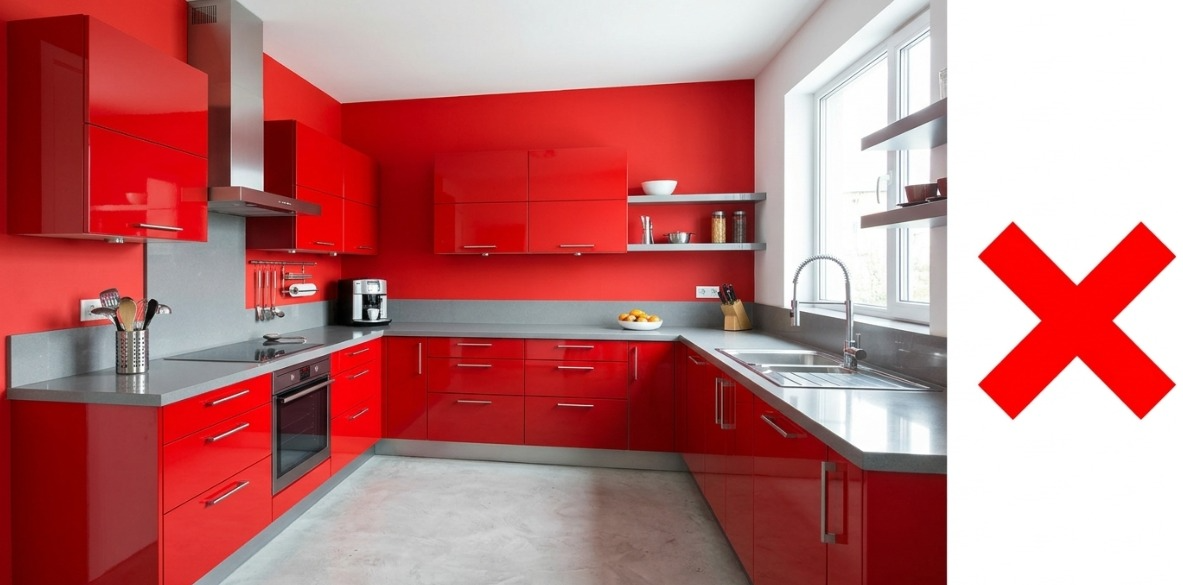
For a North-West kitchen, lighter and neutral shades can be considered.
Suggested colours include:
White
Ivory
Cream
Light grey
Soft metallic shades
G. Avoid Unnecessary Corrective Objects
Do not automatically install pyramids, copper strips, yantras, crystals or other objects simply because the kitchen is located in the North-West.
Any proposed remedy should have a clear rationale and should be considered only after examining the actual layout.
5) What Should You Avoid?
If your kitchen is in the North-West, keep the following points in mind:
Do not assume that a North-West kitchen is automatically defective.
Do not treat the North-West as equivalent to the South-East.
Do not block windows or ventilation openings with tall cabinets.
Do not place the cooking hob and sink so close that they create practical inconvenience.
Do not create excessive clutter or accumulate unnecessary appliances.
Do not undertake demolition merely because the kitchen is located in the North-West.
Do not spend on multiple remedies without first examining the floor plan.
6) When Is a Detailed Vastu Assessment Required?
A general directional assessment may not be sufficient in every case. A detailed assessment becomes important when:
The kitchen occupies more than one pada of the Vastu Purush Mandal.
It extends from North-West towards West or North.
It extends into the South-West or North-East.
The cooking hob, sink and entrance occupy different directional zones.
The kitchen is located close to the Brahmasthan.
There are cuts, extensions or irregularities in the floor plan.
The house has an unusual layout or a combined configuration of multiple flats.
An assessment using the 45-pada Vastu Purusha Mandala can help establish the exact Devta padas occupied by the kitchen and distinguish between a kitchen located primarily in Vayavya and one extending into adjoining zones.
7) General Recommendations for a North-West Kitchen
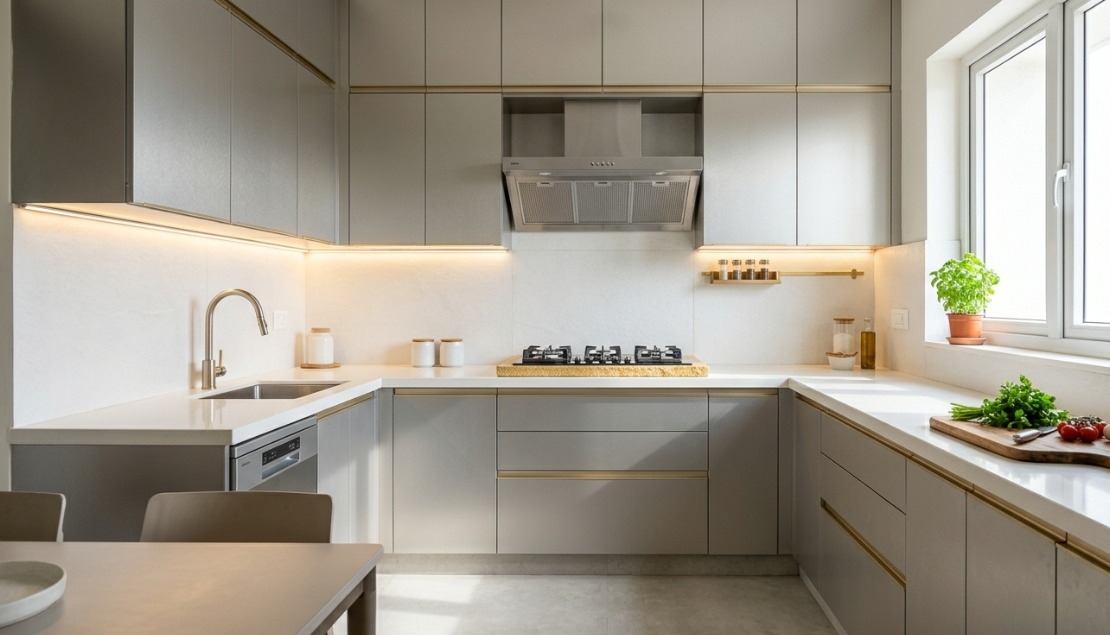
Make your countertop yellow in colour to ground the Air energy. This should especially be done if your countertop is black granite
Position the stove in the South-East corner of the kitchen so you face East while cooking
Repair dripping taps and keep the area around the washbasin dry to prevent water-fire energy clashes
Incorporate brass, copper, or stainless steel utensils and storage canisters. Metal aligns naturally with the North-West zone and replaces plastic clutter. Avoid plastic.
Vastu should guide better planning and harmonious living, not create fear about the homes we already inhabit.