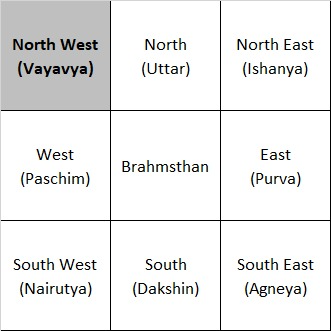
Vayavya Kon (North West)
वायव्य कोण
Vayavya Kon, or the North-West corner, is associated with Vayu Dev and the Air element. It represents movement, communication, adaptability and social interaction, making it a suitable zone for guest accommodation, living spaces and activities involving movement and circulation.

The name comes from "Vayu," the Sanskrit word for air and the name of the Vedic devta associated with wind and the movement of air. Vayu is regarded as the force that governs movement, circulation and life. Therefore, "Vayavya Kon" literally translates to the "Corner of Vayu (Air)". This direction is associated with movement, change, communication and social interaction.
Planet
This direction is associated with the planet Moon (Chandra). Chandra represents the mind, emotions, adaptability and relationships. Its association with Vayu highlights movement, changing circumstances and the importance of emotional balance.
Element
Air element (Vayu Tattva) is associated with the North-West in Vastu practice. Air symbolises movement, circulation, communication and flexibility. Just as air keeps the environment dynamic and supports life, this direction represents mobility, social connections and the movement of people and resources.
Best: What Should Be Placed Here
Guest Bedroom: The North-West is considered a suitable location for a guest bedroom. Since this direction represents movement and change, it is traditionally associated with temporary occupants and visitors rather than permanent residents.
Living Room: A living room or social interaction space can be considered in this direction. It supports movement, interaction and communication among family members and visitors.
Toilets and Bathrooms: Toilets and bathrooms can be accommodated in certain parts of the North-West, subject to the exact Vastu pada and the overall layout. Proper ventilation, drainage and plumbing are essential.
Storage of Movable Items: This direction can be considered for storing items that are regularly used, moved or circulated, rather than permanently storing heavy valuables.
Windows and Ventilation: Openings that facilitate natural airflow and cross-ventilation can be planned in this direction, depending on the climate, building orientation and architectural requirements.
Avoid: What Not to Do Here
Master Bedroom: The North-West is generally not considered the first preference for the master bedroom, as its association with movement and constant change is less suitable for a space requiring long-term stability.
Heavy Storage: Avoid excessive heavy construction, bulky storage and large cupboards in this direction. The North-West is traditionally preferred to remain relatively light and conducive to movement.
Underground Water Bodies: Large underground water tanks and borewells are generally not preferred in this direction. The North-East is traditionally considered more suitable for such installations.
Pooja Room: The North-West is not generally the preferred location for a dedicated pooja room or meditation space as mind shall not remain stable, but shall keep wavering. The North-East is traditionally considered more suitable.
Excessive Openings: Although ventilation is beneficial, excessively large or poorly positioned openings should be avoided. The placement and size of openings should be evaluated in relation to the overall building design and climatic conditions.