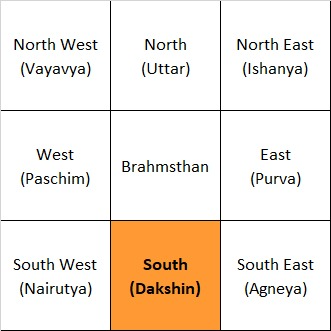
Dakshin Disha (South)
दक्षिण दिशा
Dakshin Disha, or the South direction, is associated with Yama Dev and the qualities of discipline, authority and strength. It represents responsibility, determination and stability, making it a suitable zone for bedrooms, heavy storage, staircases and spaces requiring privacy and a sense of permanence.

The word "Dakshin" (दक्षिण) in Sanskrit means South. In Vedic tradition, the South is governed by Yama, the deity of Dharma, justice and death, who is regarded as the guardian of this direction (Dikpala). Yama represents discipline, righteousness, accountability and the natural order of life. Therefore, Dakshin Disha is associated with discipline, authority, strength, responsibility and the ability to maintain order and stability.
Planet
South is associated with the planet Mars (Mangal). Mars represents courage, strength, determination, energy and action. Its association with the South highlights qualities such as discipline, assertiveness, authority and the ability to overcome challenges.
Element
South is associated with qualities of heat, strength and transformation. This direction is an amalgamation of Fire and Earth energies. While the South-East is the principal zone associated with Agni Tattva (Fire element), the South also carries characteristics of warmth, energy and activity. It represents strength, endurance and the ability to take decisive action.
Best: What Should Be Placed Here
Bedrooms: The South is considered a suitable location for bedrooms, particularly for family members who require a relatively stable and restful environment. It can also be considered for the master bedroom, depending on the overall layout.
Heavy Storage: Heavy cupboards, wardrobes and storage units can be accommodated in this direction. Traditionally, the South is preferred to be relatively heavier and more enclosed than the North.
Staircases: Staircases can be planned in this direction, as the South is traditionally considered suitable for heavier structural elements.
Offices and Workspaces: Spaces involving administration, management and decision-making can be considered in this direction. Its association with authority, discipline and determination makes it suitable for activities requiring responsibility and control.
Walls and Boundaries: A relatively strong and substantial southern boundary wall is traditionally preferred. The South is generally recommended to be higher and heavier than the North, subject to site conditions and architectural requirements.
Avoid: What Not to Do Here
Underground Water Bodies: Avoid locating underground water tanks, borewells and wells in the South. The North and North-East are traditionally considered more suitable for such installations.
Excessive Open Spaces: Avoid keeping the southern side excessively open or significantly lower than the northern side. Traditionally, the South is preferred to be relatively elevated and enclosed.
Large Openings: Avoid unnecessarily large windows, openings or entrances that compromise the relatively enclosed character recommended for this direction. However, adequate daylight and ventilation should always be maintained.
Main Entrance: The South is generally approached with greater care when planning the main entrance. However, a southern entrance should not automatically be considered inauspicious. Its suitability depends on the exact entrance pada, placement and overall property layout.
Excessive Clutter: Avoid accumulating waste materials, broken objects and unnecessary articles. The southern zone should remain organised and properly maintained.