Naag Devta
नाग
Naag devta directly regulates hidden wealth, deep intuition, sexual vitality, and emotional magnetism, ensuring that occupants possess the charismatic pull to attract opportunities and unlock concealed resources.
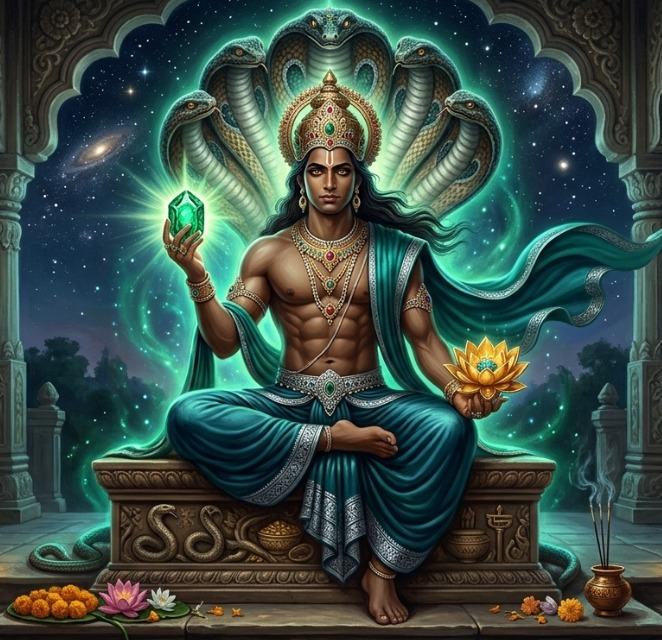
Naag is the Vedic devta associated with hidden reserves, deep emotional allure, kundalini vitality, and the protection of subterranean wealth. Acting as a magnetic conduit along the Uttar disha, this energy field regulates how effectively residents sense underlying motives, attract romantic or professional partnerships, and tap into concealed financial opportunities.
Pada in Vastu Purush Mandal
Naag resides as the second energy field (pada) along the Uttar outer perimeter. He sits directly next to Roga (the 1st pada / N1) and transitions toward Mukhya (the 3rd pada / N3), bridging the gap between physical defense and the core manifestation zone of the North.
What does this Pada do
Naag provides the intense sensory magnetism and penetrating intuition required to uncover hidden market opportunities, build deep interpersonal intimacy, protect family secrets, and draw hidden wealth to the surface.
Probable Signs of an Imbalance
If this Pada is blocked or disturbed by heavy unmanaged clutter, open fire elements, or structural cuts, the following issues often manifest in the household:
Betrayal and Hidden Enemies: Family members fall victim to covert conspiracies, backstabbing from close associates, or sudden losses caused by concealed motives they failed to detect.
Intimacy and Vitality Blocks: The occupants experience severe emotional coldness, strained romantic relationships, or a noticeable drop in physical attraction and reproductive vitality.
Balancing and Optimization
To maintain a healthy, magnetic flow of Naag's deep energy, this N2 perimeter zone must be carefully managed:
Ideal for Intimacy and Strategy: When balanced, this zone supports spaces meant for private strategic discussions, sensual harmony, or storing confidential financial records.
Strict Prohibition of Fire Elements: Keep open stoves, heaters, or aggressive red colors completely away from this pada, as fire agitates the cool, fluid serpent energy and triggers hidden conflicts or paranoia.
Harmonize with Fluid and Earthy Tones: Paint or complement this area using soft off-white, light sea-blue, or subtle metallic silver tones, keeping the space clean and free of tangled wires or broken items.
Naam Mantra
ॐ भूर्भुवः स्वः नागाय नमः॥
Naivedya (Offerings)
Raw cow milk (गोदुग्ध), Parched paddy or Kheel (लाजा) and Pure honey (शुद्ध मधु)
Modern Vastu Pada and Degrees
N2
Angular Degree from Centre: 326.25° to 337.5°