Nakshatra Sangya
नक्षत्र संज्ञा
In Vedic astrology, the 27 Nakshatras are grouped into seven Swabhav (temperaments) ranging from fixed and soft to swift and fierce. Understanding a Nakshatra's Sangya helps you choose the right Muhurat for lasting milestones like buying a home, starting a business, or traveling.
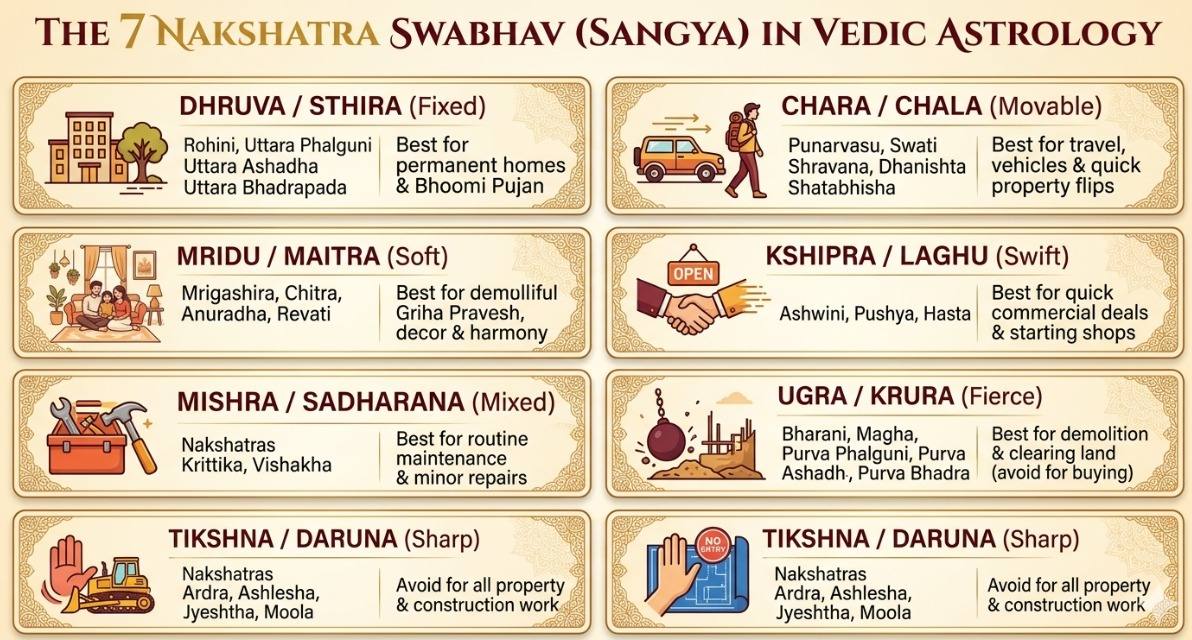
In Vedic astrology (Muhurat Shastra), the 27 Nakshatras are divided into seven distinct groups based on their Swabhav (inherent temperament) or Sangya (classification). This system is used to match the natural energy of a day's nakshatra with the goal of a specific task, such as buying a permanent home, starting a fast-moving business, or performing spiritual rituals.
1) Dhruva / Sthira (Fixed & Permanent)
(a) Core Energy: Stability, permanence, and long-term endurance.
(b) Nakshatras in This Group: Rohini, Uttara Phalguni, Uttara Ashadha, Uttara Bhadrapada
(c) Best Activities & Property Rules:
Ideal for buying a permanent home
Laying a foundation (Bhoomi Pujan)
Griha Pravesh
Planting trees
Long-term investments
2) Chara / Chala (Movable & Dynamic)
(a) Core Energy: Speed, movement, travel, and adaptability.
(b) Nakshatras in This Group: Punarvasu, Swati, Shravan, Dhanishta, Shatabhisha
(c) Best Activities & Property Rules:
Best for buying vehicles
Travel
Shifting rentals
Short-term property flips where quick resale is desired rather than permanent stay.
3) Ugra / Krura (Fierce & Aggressive)
(a) Core Energy: Force, intensity, destruction, and competitive edge
(b) Nakshatras in This Group: Bharani, Magha, Purva Phalguni, Purva Ashadha, Purva Bhadrapada
(c) Best Activities & Property Rules:
Suitable for demolition
Clearing land
Legal battles
Handling difficult disputes.
Avoid for Bhoomi Pujan, registration, or housewarming.
4) Mishra / Sadharana (Mixed & Balanced)
(a) Core Energy: A blend of sharp and soft energies for routine tasks
(b) Nakshatras in This Group: Krittika, Vishakha
(c) Best Activities & Property Rules:
Good for routine maintenance
Minor repairs
Lighting a fire/kitchen setup
Day-to-day administrative paperwork
5) Kshipra / Laghu (Swift & Light)
(a) Core Energy: Quick execution, agility, and immediate results
(b) Nakshatras in This Group: Ashwini, Pushya, Hasta (Abhijit is also included)
(c) Best Activities & Property Rules:
Excellent for starting a shop
Signing quick commercial deals
Taking possession of a ready flat
Medical or educational starts
6) Mridu / Maitra (Soft & Gentle)
(a) Core Energy: Harmony, beauty, affection, and comfort.
(b) Nakshatras in This Group: Mrigashira, Chitra, Anuradha, Revati
(c) Best Activities & Property Rules:
Very favorable for homes
Great for interior design
Buying luxury decor
Griha Pravesh
Marriage
Peaceful family transitions.
7) Tikshna / Daruna (Sharp & Dreadful)
(a) Core Energy: Cutting, separation, harshness, and intensity.
(b) Nakshatras in This Group: Ardra, Ashlesha, Jyeshtha, Moola
(c) Best Activities & Property Rules:
Strictly reserved for intense spiritual practices
Surgery
Breaking ties
Clearing obstacles
Strictly avoid for any property purchase or construction.
How Swabhav / Sangya Guides Real Estate & Life Decisions
Match Stability with Longevity: When buying a family residence or agricultural land, Dhruva (Fixed) and Mridu (Soft) Nakshatras ensure the property stays in the family and brings peace.
Use Chara for Liquidity: Real estate investors looking to renovate and resell quickly often prefer Chara (Movable) or Kshipra (Swift) stars so capital does not get stuck.
Avoid Sharp & Fierce Stars for New Beginnings: Starting construction under Tikshna (Sharp) or Ugra (Fierce) stars can invite legal delays, structural issues, or disputes among co-owners.