Vitatha Devta
वितथ
Associated with pretension, distortion of truth, and the capability to break existing patterns, this complex energy field can either trigger falsehood and unwarranted pride or be balanced to successfully engineer grand illusions, smart strategies, and dynamic material growth in competitive markets.
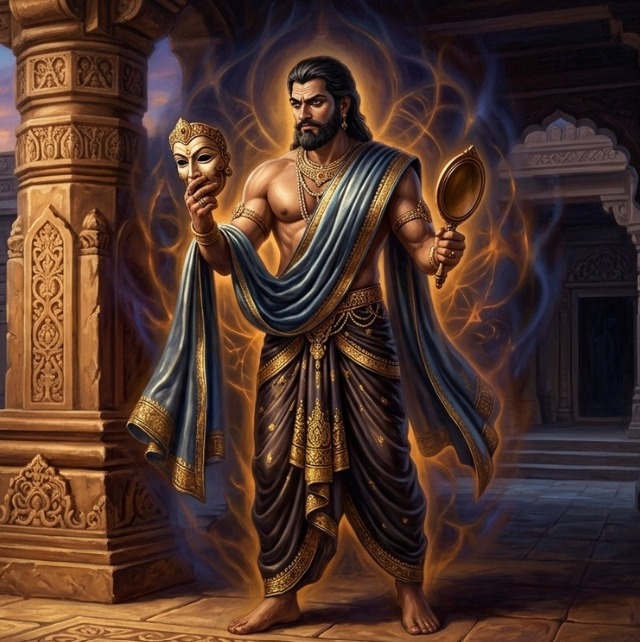
Vitatha is the Vedic Devta associated with falsehood, exaggeration, pretension, and the structural deviation from absolute truth. While traditionally viewed as a challenging force that encourages vanity and mask-wearing, this energy field regulates how effectively a person can employ shrewd strategies, execute competitive maneuvering, and project an influential public image.
Pada in Vastu Purush Mandal
Vitatha resides as the third energy field (pada) in the Agneya Kon zone along the outer perimeter. He sits directly next to Pusha (the 2nd pada / S2) and transitions toward Grihakshat (the 4th pada / S3).
What does this Pada do
Vitatha controls the psychological capacity to create illusions, devise clever corporate tactics, and present a curated, powerful version of oneself to society, making it highly relevant for PR, marketing, and navigating hostile competitive landscapes.
Probable Signs of an Imbalance
If this Pada is blocked or disturbed by heavy structures, clutter, or toilets, the following issues often manifest in the household:
Vanity and Severe Falsehood: Family members exhibit extreme arrogance, superficial behaviors, and tell unnecessary lies, which ultimately shatters their real-world credibility and inner peace.
Deceptive Victims: Conversely, an imbalanced Vitatha zone can attract deceitful associates, smooth-talking frauds, and toxic business partners who systematically exploit the residents.
Balancing and Optimization
To maintain an optimal, productive flow of Vitatha's strategic energy, this S3 zone must be carefully managed:
Keep it Grounded and Clean: Avoid excessive storage of broken things, dark heavy iron piles, or mixed trash bins that distort the perception of truth in the house.
Do Not Allow Core Toxic Drainage: Refrain from establishing main waste pipes or unmanaged toilets directly in this grid line, as it severely pollutes the household's public relations and mental clarity.
Balance with Subdued Natural Tones: Paint the area in clean off-white, light beige, or muted earthen tones, ensuring adequate balance without using overly aggressive red tones that trigger explosive arguments or pride.
Naam Mantra
ॐ भूर्भुवः स्वः वितथाय नमः॥
Naivedya (Offerings)
Spiced lentils (माषान्न), Mustard oil lamps (कटुतेल दीप) and Earthen clay pottery (मृत्तिका पात्र)
Modern Vastu Pada and Degrees
S3
Angular Degree from Centre: 157.5° to 168.75°