Gandharva Devta
गन्धर्व
Gandharva devta influences celestial music, arts, relaxation, and deep sensory enjoyment, in addition to regulating how effectively family members can destress, find creative joy, and experience the finer pleasures of life without succumbing to addiction or emotional extravagance.
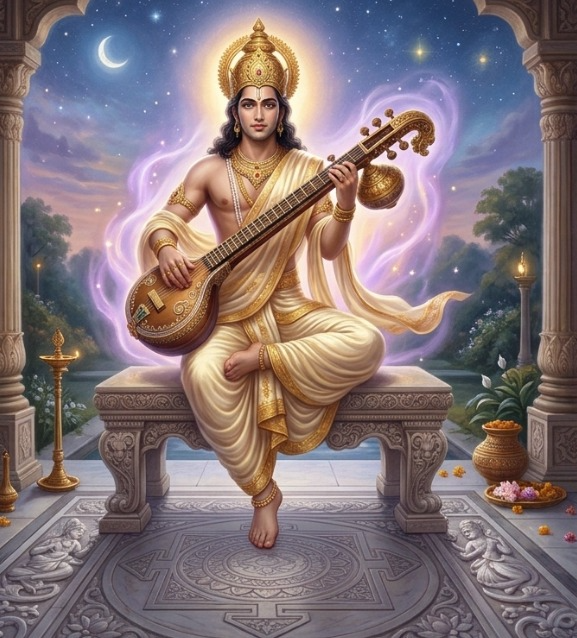
Gandharva is the Vedic Devta associated with divine music, aesthetic arts, performance, and sensory celebration. Representing the refined cultural currents of the cosmos, this energy field controls the psychological ability to unwind, appreciate beauty, and find authentic happiness or emotional balance in everyday life.
Pada in Vastu Purush Mandal
Gandharva resides as the sixth energy field (pada) in the Dakshin Disha along the outer perimeter. He sits directly next to Yama (the 5th pada / S5) and transitions toward Bhringraj (the 7th pada / S7).
What does this Pada do
Gandharva provides the energy of leisure and mental relaxation, allowing individuals to shed professional stress, embrace artistic talents, and maintain vibrant social charisma and magnetism.
Probable Signs of an Imbalance
If this Pada is blocked or disturbed by heavy unmanaged scrap, structural imbalances, or toilets, the following issues often manifest in the household:
Inability to Relax: Family members remain perpetually high-strung, irritable, and completely unable to experience joy or switch off from their work pressures.
Indulgence and Extravagance: Conversely, an over-activated or corrupted Gandharva zone can lead residents down paths of reckless hedonism, excessive spending on luxury vanity, or substance dependence as an escape mechanism.
Balancing and Optimization
To maintain a healthy flow of Gandharva's rejuvenating, artistic energy, this S6 zone must be harmoniously curated:
Perfect for Leisure and Media: This is an excellent area for a family lounge, a home theatre system, musical instrument storage, or a space dedicated to practicing fine arts.
Avoid Toxic and Dulling Elements: Keep the zone free from heavily decaying waste, broken non-functional items, or heavy dark structural clutter that dampens creative joy and mental freshness.
Incorporate Soft Warm Elements: Decorate the area using soothing shades of cream, warm beige, or light woody highlights, ensuring the lighting remains warm and relaxing to mirror a space of creative tranquility.
Naam Mantra
ॐ भूर्भुवः स्वः गंधर्वाय नमः॥
Naivedya (Offerings)
Fragrant sandalwood paste (चंदन), Sweet milk pudding (खीर) and Clarified butter (घृत)
Modern Vastu Pada and Degrees
S6
Angular Degree from Centre: 191.25° to 202.5°