Rudra Devta
रुद्र
Representing the fierce, transformative storm-aspect of Lord Shiva (Howler of the Cosmic Winds), this vital inner energy field directly regulates uninterrupted flow of work, removal of stagnation, emotional release, and the power to dismantle stubborn obstacles within the household.
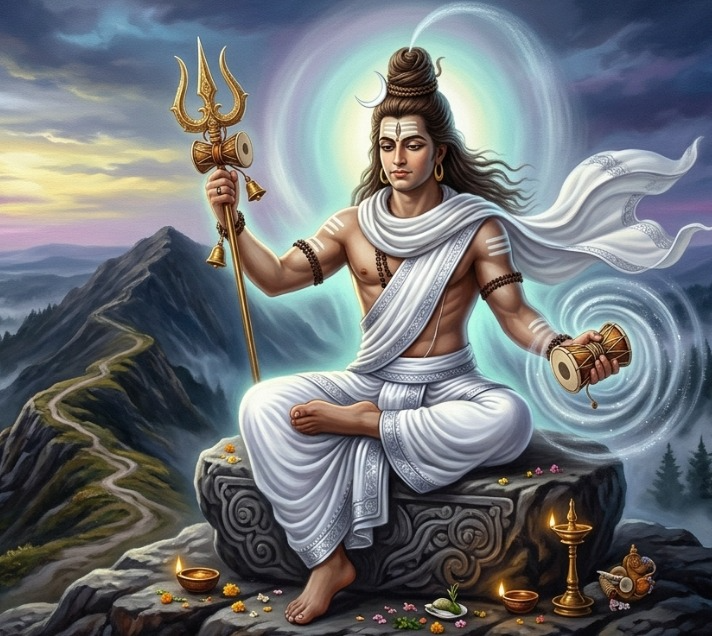
Rudra (traditionally revered as the primordial Vedic deity of tempestuous winds, transformative dissolution, and healing renewal) is the Vedic devta associated with continuous momentum, clearing blockages, and emotional catharsis. Positioned immediately North-West of the central Brahmasthan, this energy field acts as the dynamic engine that prevents tasks from stalling and sweeps away stagnant energy.
Pada in Vastu Purush Mandal
Rudra resides in the inner ring (Antahpada) at the Vayavya Kon vertex of the central Brahmasthan. In a 9×9 (81-pada) Vastu Purush Mandal, he occupies the inner North-West diagonal pada directly bordering Brahma, paired closely with Rajyakshma (who sits immediately adjacent to him toward the outer North-West corner), and flanked by Mitra to the South and Prithvidhar to the East.
What does this Pada do
Rudra provides the unstoppable, clearing momentum required to keep daily work flowing smoothly, dissolve mental or emotional blockages, overcome sudden crises, and renew stagnant situations.
Probable Signs of an Imbalance
If this inner Pada is blocked or disturbed by heavy storage, fire elements, staircases, or toilets, the following issues often manifest in the household:
Chronic Stagnation and Interrupted Flow: Family members experience recurring delays, sudden halts in ongoing projects, and an inability to maintain smooth workflow.
Emotional Turmoil and Outbursts: Occupants suffer from pent-up frustration, sudden anger, restlessness, and unresolved emotional stress.
Balancing and Optimization
To maintain a clean, dynamic flow of Rudra's clearing energy, this crucial inner North-West zone must be carefully managed:
Keep the Inner North-West Airy and Uncluttered: As an inner pada bordering the Brahmasthan, keep this area open, well-ventilated, and free of heavy immovable storage.
Strict Prohibition of Fire and Toilets: Never construct kitchen stoves, open fireplaces, or toilets in this inner North-West zone, as fire and waste agitate the volatile air-and-space balance of Rudra.
Enhance with Cool Air and Space Hues: Decorate this space using clean off-white, soft pearl grey, light silver, or subtle sky-blue shades, keeping the environment bright and breezy.
Naam Mantra
ॐ भूर्भुवः स्वः रुद्राय नमः॥
Naivedya (Offerings)
Pure cow milk with honey (मधुयुक्त गोदुग्ध), Sweetened rice pudding or Kheer (खीर) and Fresh white flowers or Bilva leaves (श्वेत पुष्प एवं बिल्व पत्र)
Modern Vastu Pada and Degrees
Inner North-West Zone (Antahpada – North-West of Brahmasthan)
Angular Degree from Centre: 292.5° to 337.5° (centered along the 315.0° North-West diagonal in the inner ring)