Revati Nakshatra
रेवती नक्षत्र
Revati is the twenty-seventh Nakshatra in Vedic astrology, symbolized by a pair of fish and ruled by Mercury and Pushan. Discover its core astrological features, symbol, four padas, and practical suitability for residential purchases, Griha Pravesh, water Vastu, and Panchak precautions.
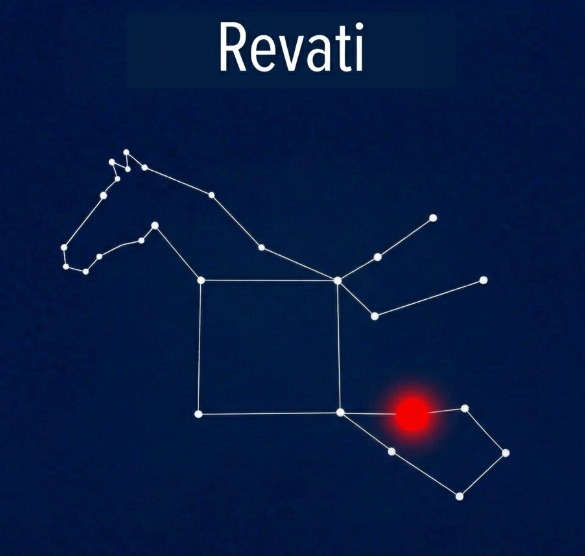
Revati derives its name from Revati, meaning "wealthy," "abundant," "prosperous," or "transcending." It is the twenty-seventh and final Nakshatra in the 27-Nakshatra sequence, occupying the final degrees of the watery, compassionate sign of Pisces and embodying safe passage, culmination, spiritual fulfillment, and gentle prosperity.
The fish or a drum for marking time symbolises fluid abundance, nourishment, protection during journeys, and harmonious completion. Consequently, Revati is traditionally associated with safe thresholds, flourishing households, water elements, and auspicious property acquisitions.
Nakshatra | |
Nakshatra (Constellation) | Revati |
Nakshatra Grah (Planet) | Budh (Mercury) |
Symbol | Pair of Fish / Drum for Marking Time |
Yes (All 4 Padas) | |
Yes | |
Nadi | Antya |
Yoni | Gaja (Elephant) |
Gana | Dev |
Aaradhya-Vriksh | Mahua (Madhuca longifolia) |
Daan | Grains / Green Lentils |
Devta | Pushan (The Nurturer, Protector of Travelers & Safe Journeys) |
Tiryakmukha Nakshatra (Horizontal / Forward-Facing) | |
Andha Lochan (Blind-Eyed Nakshatra) | |
Akasha (Ether / Space) | |
Mridu / Maitra (Soft & Gentle) | |
Core traits | Compassionate, nurturing, protective, artistic, intuitive, generous, and attuned to harmony, safe completion, and abundance |
Nakshatra Rashi | |
Rashi | Pisces |
Degree | 16°40′ – 30°00′ in Pisces |
Rashi Grah (Planet) | Guru (Jupiter) |
Rashi Varna | Brahmin |
Rashi Vashya | Jalchar (Water-dwelling) |
Rashi Tatva | Jala (Water) |
Nakshatra Padas | ||||
Details | First Pada | Second Pada | Third Pada | Fourth Pada |
Pada Rashi | Dhanu (Sagittarius) | Makar (Capricorn) | Kumbh (Aquarius) | Meen (Pisces) |
Degrees | 16°40′ – 20°00′ | 20°00′ – 23°20′ | 23°20′ – 26°40′ | 26°40′ – 30°00′ |
Pada Planet | Guru (Jupiter) | Shani (Saturn) | Shani (Saturn) | Guru (Jupiter) |
Letter (English) | De | Do | Cha | Chi |
Letter (Hindi) | दे | डो / दो | च / चा | ची |
Traits | Generous, idealistic, philosophical, and protective | Practical, disciplined, structured, and materially grounded | Visionary, humanitarian, organized, and community-minded | Deeply intuitive, compassionate, spiritual, and artistic |
Property and Vastu Suitability under Revati Nakshatra
Residential Purchase & Registration (Highly Favorable): Classified as a Mridu (gentle/soft) nakshatra with Dev Gana and ruled by Pushan (protector of wealth and safe transitions), Revati is widely regarded as one of the most auspicious stars in Vastu for buying family homes, apartments, and peaceful properties (best executed in the 1st, 2nd, or 3rd Padas).
Residential Griha Pravesh (Highly Favorable — with Gand Mool Caution): Infuses a new residence with warmth, compassion, nourishment, and domestic peace, provided the sensitive 4th Pada (Gand Mool junction at 26°40′–30°00′ Pisces) is avoided.
Aquariums, Water Features & North-East (Ishan) Sanctuaries (Highly Favorable): Symbolized by a pair of fish in the Jala (Water) sign of Pisces, it is ideal for installing aquariums, indoor fountains, garden ponds, and designing tranquil meditation or pooja spaces.
Land Leveling, Roads & Pathways (Favorable): Supported by its Tiryak Mukh (horizontal orientation) and Pushan Devta's rulership over safe paths, it favors laying driveways, garden walkways, and leveling plots.
The Panchak & Gand Mool Precautions (Avoid Roof Casting & 4th Pada): Because Revati falls within Panchak, roof slab casting (Chhat) and collecting timber are avoided; additionally, as the final Gand Mool nakshatra, the 4th Pada (26°40′–30°00′ Pisces) is strictly avoided for major beginnings or Bhoomi Pujan.
Revati Nakshatra is best harnessed in Vastu for welcoming gentle abundance, peaceful domestic harmony, and safe new transitions into a home—while honoring Panchak rules and avoiding its final Gand Mool degrees.