Uttara Phalguni Nakshatra
उत्तरा फाल्गुनी नक्षत्र
Uttara Phalguni is the twelfth Nakshatra in Vedic astrology, symbolized by the back legs of a bed and ruled by the Sun and Aryaman. Discover its core astrological features, symbol, four padas, and high suitability for property deeds, Bhoomi Pujan, construction, and Griha Pravesh.
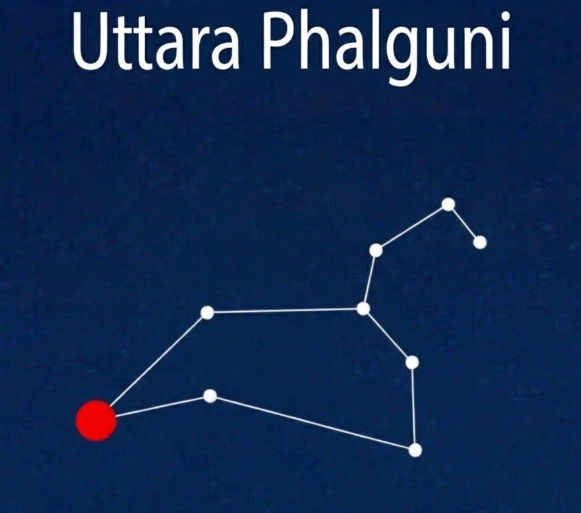
Uttara Phalguni derives its name from Uttara (latter) and Phalguni (fig tree or reddish/fruitful one), meaning "the latter reddish one." It is the twelfth Nakshatra in the 27-Nakshatra sequence and bridges the signs of Leo and Virgo, embodying stability, commitment, patronage, and enduring prosperity.
The back legs of a bed or a hammock symbolise sustained support, rest after accomplishment, marital stability, and dependable foundations. Consequently, Uttara Phalguni is traditionally associated with loyalty, structured growth, long-term agreements, and auspicious permanent beginnings.
Nakshatra | |
Nakshatra (Constellation) | Uttara Phalguni |
Nakshatra Grah (Planet) | Surya (Sun) |
Symbol | Back Legs of a Bed / Hammock |
No | |
No | |
Nadi | Aadya |
Yoni | Gau (Cow) |
Gana | Manushya |
Aaradhya-Vriksh | Pakad / Plaksha (White Fig / Ficus virens) |
Daan | Moti |
Devta | Aryaman (Aditya of Contracts, Unions & Patronage) |
Urdhvamukha Nakshatra (Upward-Facing) | |
Andha Lochan (Blind-Eyed Nakshatra) | |
Agni (Fire) | |
Dhruva / Sthira (Fixed & Permanent) | |
Core traits | Dependable, generous, organized, principled, supportive, dignified, and focused on lasting stability and commitment |
Nakshatra Rashi | |
Rashi | Leo (1st Pada) & Virgo (2nd, 3rd & 4th Padas) |
Degree | 26°40′ Leo – 10°00′ Virgo |
Rashi Grah (Planet) | Surya (Sun) & Budh (Mercury) |
Rashi Varna | Kshatriya (1st Pada) & Vaishya (2nd–4th Padas) |
Rashi Vashya | Vanchar (Leo) & Dwipad / Manav (Virgo) |
Rashi Tatva | Agni (Fire) & Prithvi (Earth) |
Nakshatra Padas | ||||
Details | First Pada | Second Pada | Third Pada | Fourth Pada |
Pada Rashi | Dhanu (Sagittarius) | Makar (Capricorn) | Kumbh (Aquarius) | Meen (Pisces) |
Degrees | 26°40′ – 30°00′ Leo | 00°00′ – 03°20′ Virgo | 03°20′ – 06°40′ Virgo | 06°40′ – 10°00′ Virgo |
Pada Planet | Guru (Jupiter) | Shani (Saturn) | Shani (Saturn) | Guru (Jupiter) |
Letter (English) | Te | To | Pa | Pi |
Letter (Hindi) | टे | तो / टो | पा / प | पी / पि |
Traits | Noble, ambitious, ethical, and leadership-oriented | Practical, disciplined, structured, and financially prudent | Strategic, community-minded, organized, and forward-looking | Compassionate, intuitive, artistic, and service-driven |
Property and Vastu Suitability under Uttara Phalguni Nakshatra
Residential Purchase & Registration (Highly Favorable): Classified as a Dhruva (fixed/permanent) nakshatra and governed by Aryama (deity of contracts and alliances), Uttara Phalguni is one of the finest stars in Vastu for signing property deeds and buying a lifelong family home.
Construction & Bhoomi Pujan (Highly Favorable): Supported by Urdhwamukh (upward-facing) orientation and fixed stability, it is ideal for laying foundations and erecting structures meant to stand securely for generations.
Residential & Commercial Griha Pravesh (Highly Favorable): Brings dignity, domestic harmony, mutual support, and steady financial growth into a newly occupied home or office.
Legal Agreements, Leases & Partnerships (Highly Favorable): Ruled by the Sun and Aryaman, it is exceptionally auspicious for executing long-term rental agreements, joint-venture property contracts, and society registrations.
Demolition & Temporary Setups (Not Recommended): Because its Dhruva (fixed) energy anchors permanence and continuity, Uttara Phalguni is avoided when tearing down structures or setting up short-term arrangements.
Uttara Phalguni Nakshatra is one of the premier stars in Vastu for sealing binding property contracts, building permanent foundations, and anchoring lasting domestic harmony.